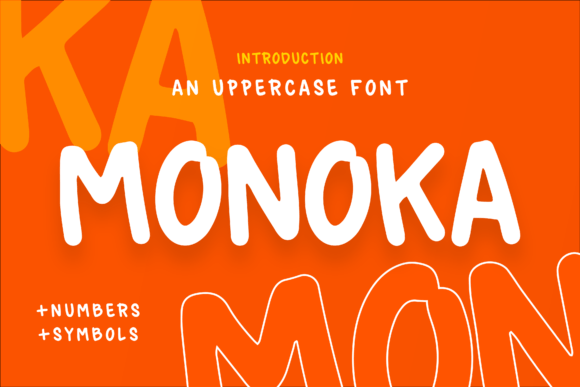
Monoka: A Handwritten Font for Creative Projects
There I was, staring at a blank brand board, trying to find the right visual voice for a new artisanal café. The client wanted something warm, approachable, and a little playful—something that felt like a handwritten note from a friend. That’s when I pulled out Monoka, a handwritten uppercase font that immediately caught my eye with its bold, simple style.
What Makes Monoka Unique?
Monoka is a premium font that leans into the charm of hand-drawn typography. Its uppercase letters are clean, yet they carry a subtle irregularity that gives them character. It doesn’t feel too casual or too rigid—it sits in that sweet spot between modern and nostalgic. The weight is consistent, which makes it versatile for different design applications.
When I first tested it on a logo concept, I was struck by how well it balanced fun with professionalism. It wasn’t overly decorative, but it had enough personality to stand out. The font didn’t scream “handmade,” but it whispered it in a way that felt authentic.
Testing Monoka in Real-World Branding
I used Monoka across several branding elements for the café project. On the logo, it worked well as a headline font, paired with a simple sans serif for the tagline. The combination felt cohesive and easy on the eyes. When I placed it on a packaging mockup, it added a friendly touch without overwhelming the design.
On a business card, Monoka held up nicely at smaller sizes, though I found that using it for body text wasn’t ideal. It’s best suited for short phrases or headlines where its personality can shine. In web design, it made an excellent choice for hero sections or call-to-action buttons, adding a sense of energy and warmth.
For social media graphics, Monoka brought a human touch to the visuals. It worked especially well on Instagram posts and Facebook banners, where the font’s boldness helped catch attention without being distracting.
Strengths and Limitations
Monoka’s biggest strength is its versatility. It fits well in projects that aim to feel personal and expressive. Whether it’s a sticker, a greeting card, or a poster, it adds a layer of creativity that other fonts might not. It also pairs well with serif or sans serif fonts, making it a great accent in a broader typography system.
However, there are limitations. At smaller sizes, the details of the letters can get lost, which makes it less readable. It’s not the best choice for long paragraphs or formal corporate settings. If you’re designing for a more traditional brand, Monoka might feel too informal.
Another thing to consider is the file format. Monoka comes in OTF, which is standard for most design software, but if you're working in a digital environment that requires webfonts, you’ll need to check if it’s available in that format.
Best Uses for Monoka
Monoka excels as a display or headline font. It’s perfect for logos, signage, and any design that needs to make a statement. For editorial design, it works well as a subheading or title. In packaging design, it adds a handmade feel that resonates with customers looking for authenticity.
It also makes a strong impression in posters and flyers, where its boldness helps draw the eye. When used sparingly, it can add a unique flair to web headers, social media posts, or even product labels.
If you’re working on a creative studio identity or a handmade shop branding project, Monoka could be a great fit. It conveys a sense of care and individuality that aligns with those types of businesses.
Practical Tips for Using Monoka
Before finalizing any design work with Monoka, test it in different contexts. Print it out, view it on screens, and see how it looks at various sizes. This will help you understand its strengths and limitations in real-world scenarios.
When pairing Monoka with other fonts, go for contrasts. A clean sans serif can balance its handcrafted feel, while a classic serif can add sophistication. Avoid using it with other highly decorative fonts, as it might become visually cluttered.
Lastly, always check the commercial licensing before using Monoka in client work. Make sure it’s suitable for your intended use, whether it’s for print, digital products, or merchandise.